Devdari is one of the best-known natural sights of eastern Uttar Pradesh. Water slides over layered rock, falls into a steep-walled gorge and runs on through dense dry-deciduous forest. There are no city sounds, only the falls, the wind in the trees and the birds. This page brings together what is known about Devdari: where it is, how the landscape formed, what lives around it, its history and what a visit feels like.
Devdari at a glance
| Name | Devdari Waterfall (also written Dewdari or DevDari; Hindi: देवदरी जलप्रपात) |
|---|---|
| Location | Inside Chandraprabha Wildlife Sanctuary, Chakia area, Chandauli district, Uttar Pradesh, India |
| Landscape | Waterfall into a deep, forested sandstone gorge on the northern slopes of the Kaimur hills (part of the wider Vindhya range) |
| Nearest town | Chakia |
| From Varanasi | About 70 km to the sanctuary (regional estimate from official sources) |
| Nearest railway | Pt. Deen Dayal Upadhyay (DDU) Junction, formerly Mughalsarai, about 50 km |
| Nearest airport | Lal Bahadur Shastri International Airport, Varanasi. Official sources give 65 km to 95 km depending on the reference point |
| Height | Travel guides often quote about 58 m. No official survey figure has been published. |
| Best flow | Monsoon (roughly July to September), when the falls are strongest, and access is riskiest |
| Sanctuary hours | Listed as 06:00–17:00 by Incredible India (provisional, confirm locally) |
| Stay | No ordinary hotel at the falls; most people visit on a day trip |
| Nearby | Rajdari Waterfall, Latif Shah Dam, Chakia Kali Mandir |
Where Devdari is
Devdari lies inside Chandraprabha Wildlife Sanctuary in Chandauli district, in the far east of Uttar Pradesh close to the Bihar border. Chandauli was carved out of Varanasi district in 1997, and the sanctuary sits in its southern, hilly part around the small towns of Chakia and Naugarh.
The Chandauli district administration describes the forest as about 70 km from Varanasi. That makes Devdari one of the closest true wilderness waterfalls to the city: near enough for a day trip, but far enough that the drive takes you out of the Gangetic plains and into rocky, forested hill country.
Most visitors approach through Chakia, which is the last proper town on the way and the usual place for fuel, snacks and onward jeeps. For exact routes, transport options and caveats, see How to Reach Devdari and Location & Map.
The gorge and the landscape
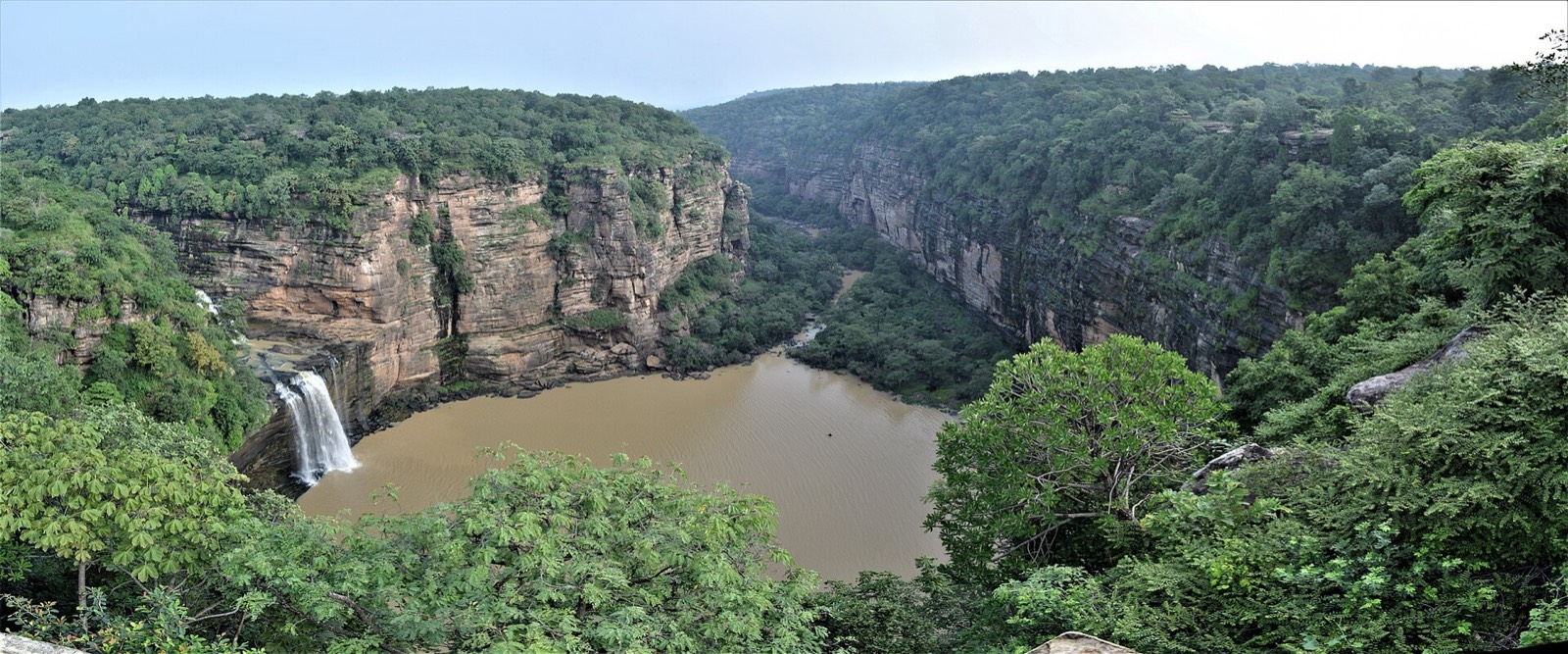
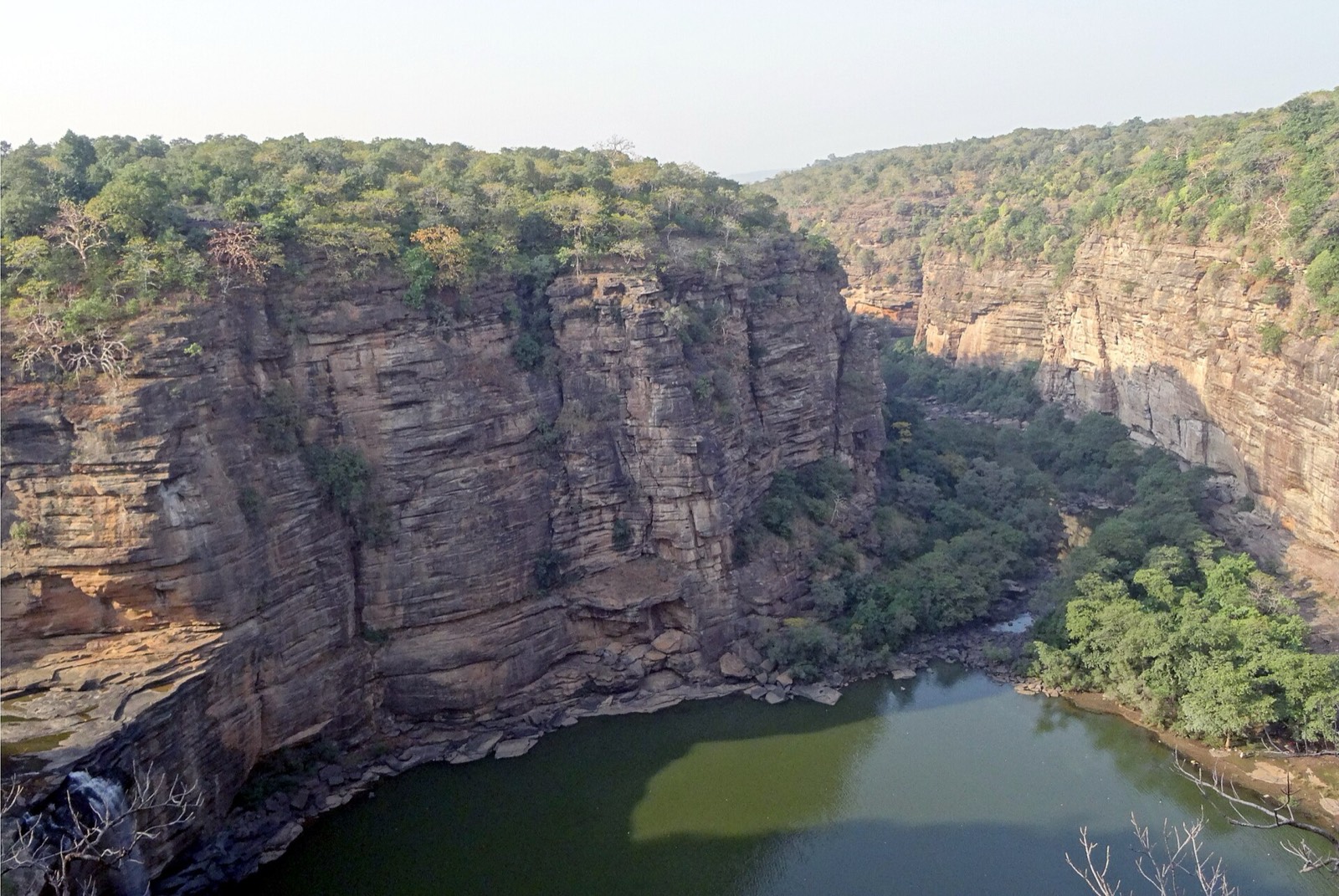
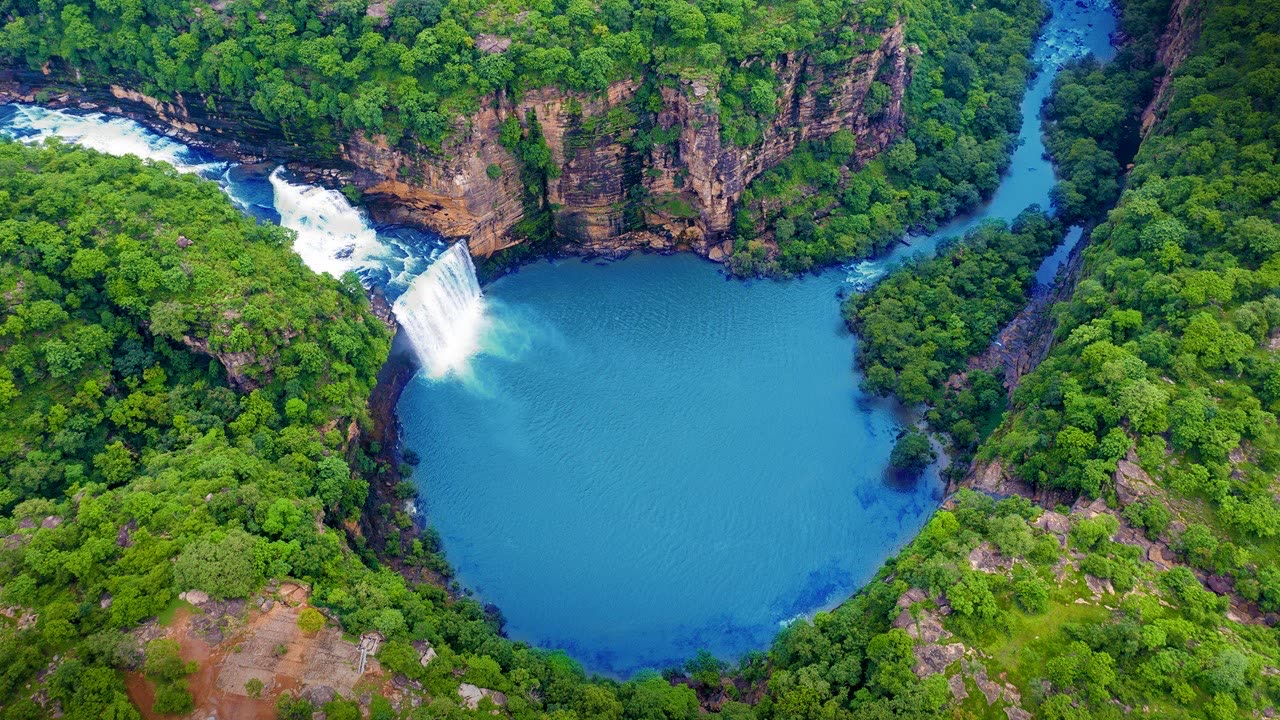
What makes Devdari memorable is not just the waterfall but the gorge it falls into. Over a very long time, the stream has cut down through horizontal beds of sandstone, leaving sheer walls stacked in layers like the pages of a closed book. The Chandraprabha sanctuary sits on the Naugarh and Vijaygarh hillocks on the northern slope of the Kaimur range, where this kind of layered rock is common.
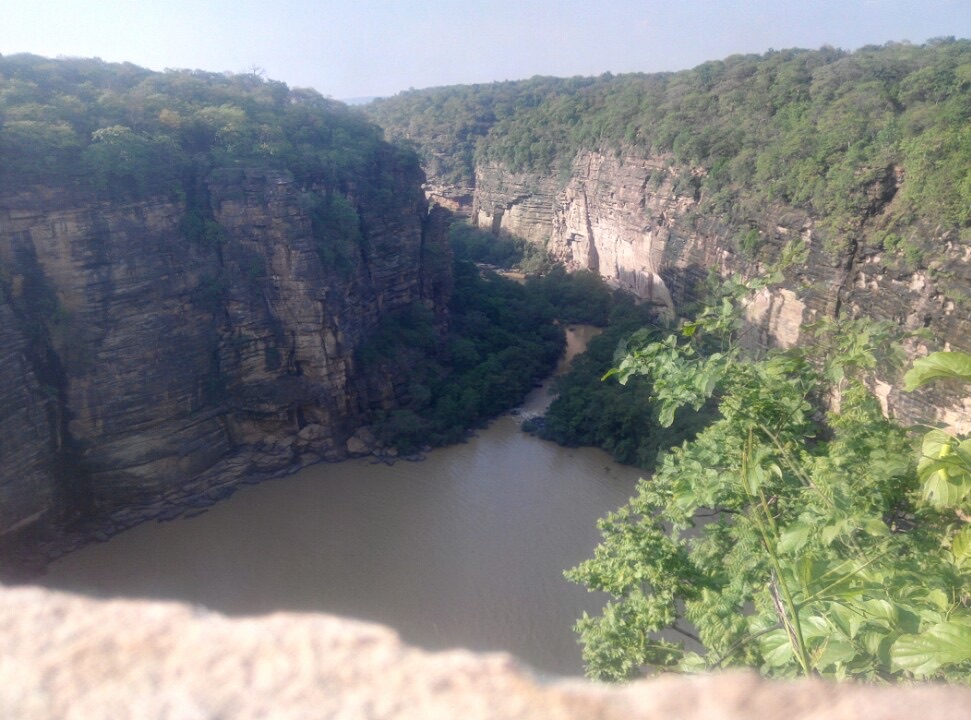
From the rim you look down over the falls into a pool and a winding green valley. One traveller famously compared the view to a miniature canyon. The cliff faces are streaked with seepage lines, lichens and small plants clinging to ledges, and trees crowd the gorge floor wherever there is soil and water.
The hills around the sanctuary also hold many rock shelters and caves. The Chandauli tourism portal notes that some of these, near Naugarh and Vijaygarh forts, were once used by early humans and still show primitive paintings.
Where the water comes from
Devdari is part of the drainage of the Chandraprabha river, which gives the sanctuary its name (often explained as "the gleam of the moon"). The Chandraprabha is a tributary of the Karmanasa river, and both flow north out of these hills towards the Ganga.
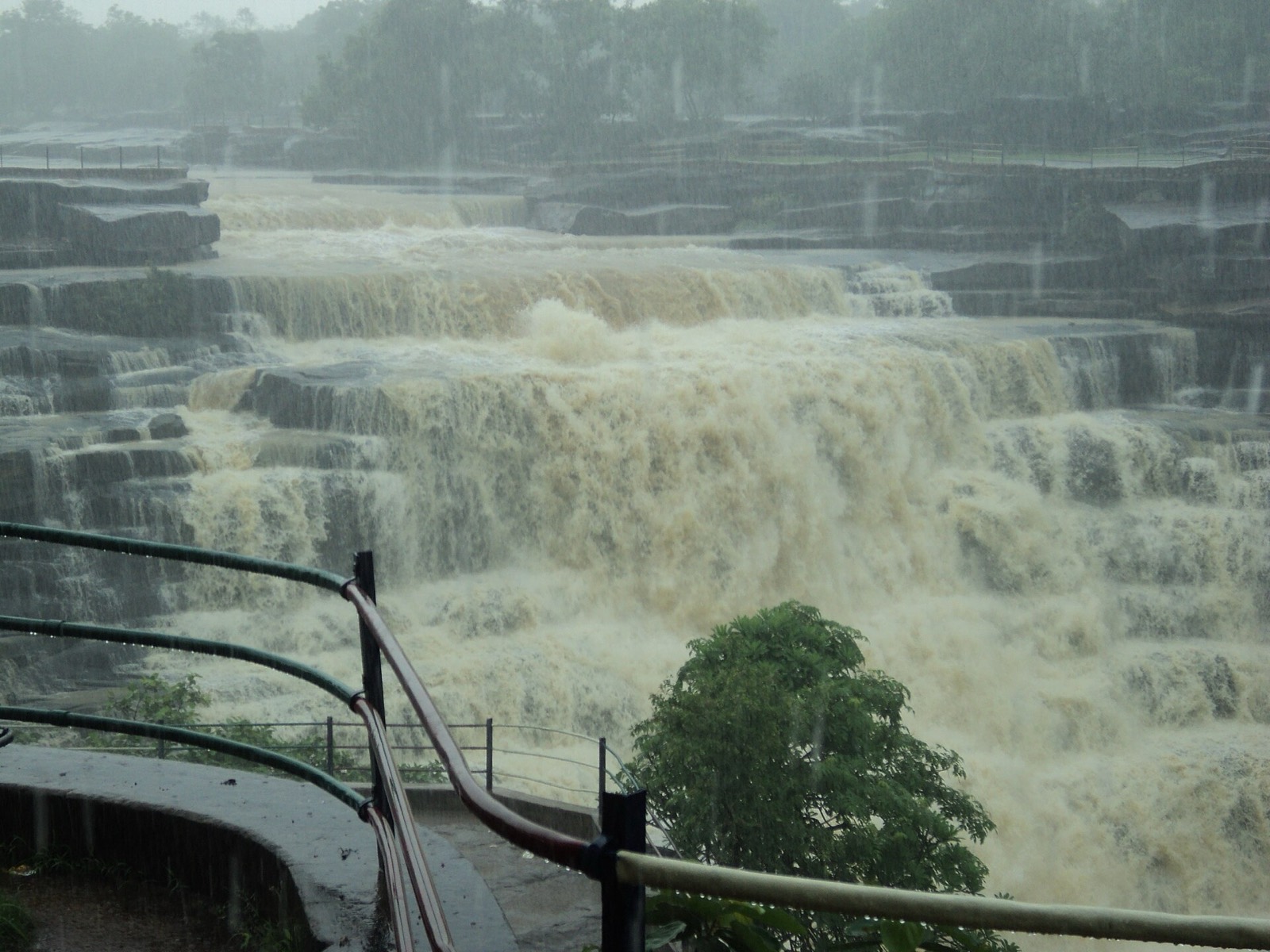
Several travel accounts say that both Devdari and Rajdari are fed by water from a reservoir built a short way upstream of the Chandraprabha dam. Because of this, and because the rains in this region are so seasonal, the flow at Devdari changes enormously through the year: a thundering, muddy torrent in the monsoon, a clear and gentle fall in winter, and sometimes little more than a trickle in the dry heat before the rains.
Why this matters for your trip: if you want to see Devdari at full power, go during or just after the monsoon, but read Safety & Rules first. If you want calm water and easier walking, winter is gentler. See Best Time to Visit.
Devdari and Rajdari
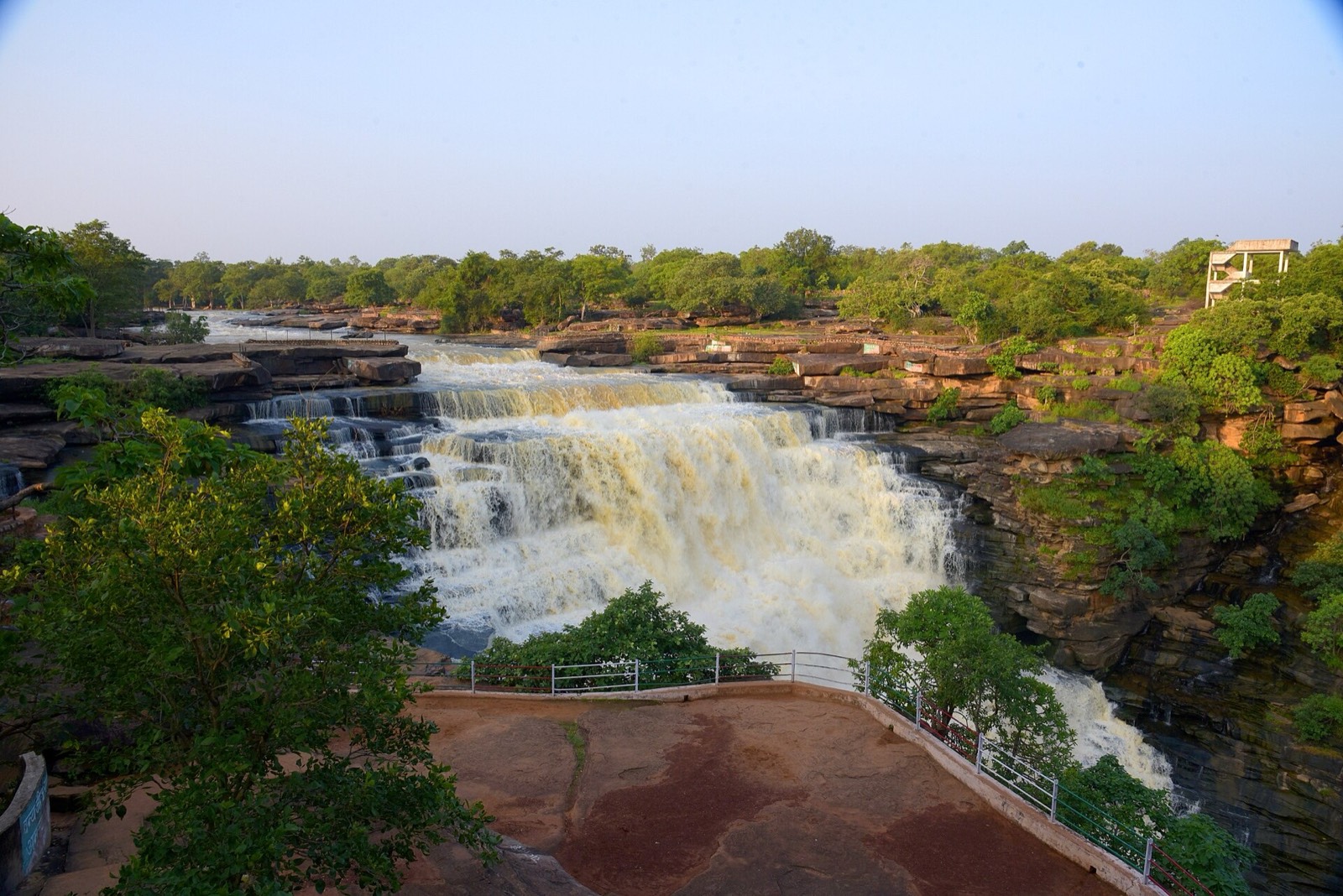
Devdari has a well-known neighbour, Rajdari Waterfall, in the same sanctuary. Travel sources place the two only a few hundred metres apart (figures of 500–700 m are quoted), and the Chandauli district website describes both on near-identical pages. Rajdari is a broad, stepped cascade with railings and viewing areas; Devdari is the more dramatic plunge into the gorge.
Many visitors see both on the same outing. On this site Devdari is the main subject, and Rajdari has its own guide under Nearby Attractions.
Wildlife around the falls
Devdari is not just scenery. It sits in a protected wildlife habitat. One of the most remarkable details comes from the UP Eco-Tourism Board, which notes that a colony of vultures lives in the cavities of the cliff face and flanks of Devdari Waterfall. Vultures have declined drastically across India, so the cliffs here are worth looking at closely (from a safe distance, with binoculars).
Official and reference sources list a wide range of animals in Chandraprabha Wildlife Sanctuary:
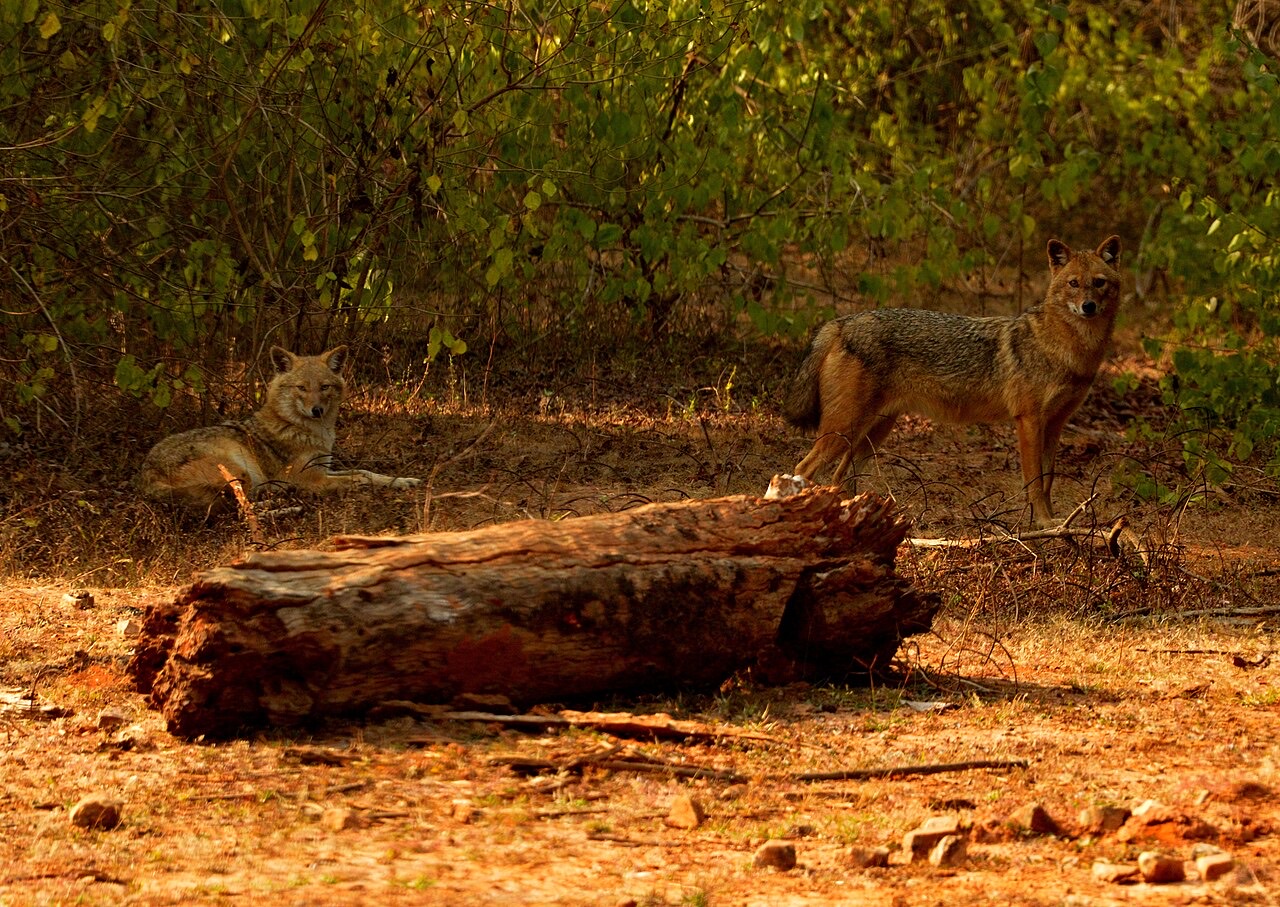
- Mammals: leopard, sloth bear, chital (spotted deer), sambar, nilgai, chinkara (Indian gazelle), blackbuck, wild boar, striped hyena, jackal, fox and porcupine.
- Birds: around 150 species, including peafowl, red junglefowl, quail, partridge, eagles, vultures, mynas, parakeets, cuckoos, barn owls and bulbuls.
- Reptiles: python, cobra, krait, water snakes and monitor lizards; gharial are also recorded in the sanctuary's rivers.
Most large mammals are shy and active around dawn and dusk, so a midday visit to the falls usually means birds, butterflies and monkeys rather than leopards. Keep to paths, never feed animals and keep noise down; you will see far more that way.
The forest and its plants
The sanctuary is mostly dry deciduous forest growing on gneiss and layered sandstone, with patches of scrub, savanna grassland and riverside woodland. Many trees lose their leaves in the hot months, so the hills look golden-brown in April–June and turn intensely green within weeks of the first heavy rains.
Trees named by the UP Eco-Tourism Board and other sources include tendu, mahua, palash (flame of the forest), sal, neem, semal (silk cotton), amla (Indian gooseberry), teak (saagun), amaltas, koraiya and ber. The forest is also known for medicinal plants used in Ayurveda, such as safed musli, shatavari, ashwagandha, chirata and sarpagandha. The Chandauli tourism portal links this herbal tradition to the time of Kashi Raj Divodas Dhanvantari.
If you visit in late February or March, look for the bright orange flowers of palash on bare branches; in the monsoon, the gorge walls are draped in fresh green.
History of the area
The forests around Devdari have long been valued. According to the Chandauli tourism portal and other references, they were developed as a hunting ground for the rulers of Benares (Varanasi) in the late 18th century. In May 1957 the area was declared Chandraprabha Wildlife Sanctuary to protect its wildlife and biodiversity.
The sanctuary has an unusual place in Indian conservation history. In 1957–58, three Asiatic lions from Gir in Gujarat (a male named Raja and two females named Rani and Jayshree) were released here as part of an early attempt to create a second home for the species. Their numbers reportedly grew to eleven by 1969, but the lions disappeared around 1970, and the experiment is generally put down to heavy pressure on the habitat. The Chandauli district website still mentions that the sanctuary was first set up with Asiatic lions in mind.
In more recent years, the waterfalls have become a popular day-trip spot for families from Varanasi and the surrounding districts. In a reply to Parliament on 16 March 2026, the Ministry of Tourism said there was no proposal under consideration in its specified central schemes for developing Rajdari–Devdari, so treat any claims of an approved central redevelopment project with caution.
Devdari through the seasons
| Season | What Devdari is like |
|---|---|
| Monsoon (Jul–Sep) | Strongest flow, muddy brown water, roaring sound and spray; lush green gorge. Slippery rock, sudden water rises and possible access restrictions. |
| After the rains (Oct–Nov) | Good flow, clearing water, green hills and pleasant temperatures. Often the best balance for most visitors. |
| Winter (Dec–Feb) | Cool mornings, comfortable walking, clearer and gentler water. Flow can be modest. |
| Summer (Mar–Jun) | Very hot by May–June, forest dry and leafless, falls may be weak. Palash flowers in early spring. Go early and carry plenty of water. |
For a month-by-month breakdown, see Best Time to Visit Devdari.
Photographing Devdari
- Lens: the gorge is deep and wide, so a wide-angle lens (or your phone's 0.5× camera) helps you fit in the falls and the cliffs together.
- Light: mornings and late afternoons give softer light and longer shadows on the layered rock. Midday light is harsh in the gorge.
- Spray: in the monsoon the spray carries a long way, so keep cameras and phones in a dry bag and wipe the lens often.
- Slow water: a small tripod or a steady rock lets you blur moving water, but never set up on wet edges or in the flow.
- Drones: do not fly a drone in the sanctuary without permission from the forest authorities; it disturbs wildlife, including the vultures on the cliffs.
- People: ask before photographing local residents, vendors or pilgrims.
Browse more pictures in the Devdari Photo Gallery.
Who will enjoy Devdari
- Families on a day out: a scenic picnic-style outing from Varanasi or Chandauli, with close supervision of children near edges and water.
- Photographers: layered cliffs, falling water and changing seasonal colour.
- Nature lovers and birdwatchers: forest birds and the cliff-nesting vultures.
- Travellers based in Varanasi: a complete change of scene from the ghats and temples.
The terrain is uneven and rocky, and accessible routes for wheelchair users or people with limited mobility have not been verified. Toilets, drinking water and mobile signal are not guaranteed. See Facilities before you plan with elderly relatives or small children.
Visiting responsibly
Devdari is inside a protected wildlife sanctuary, not an amusement park. A few simple habits keep it beautiful and keep you safe:
- Stay on paths and in designated viewing areas; do not climb on wet rocks or lean over edges for photos.
- Do not swim, dive or wade in strong currents; water levels can rise quickly after rain upstream.
- Carry all rubbish back out, including food wrappers and plastic bottles.
- No loud music, no feeding animals and no off-trail entry into the forest.
- Follow instructions from forest staff and any posted rules.
The full list is on Safety & Rules.
What is still unverified
We would rather tell you what we do not know than make things up. As of November 2026, these details are not independently verified by Devdari.com:
- Current gate timings and any entry, vehicle or camera fees
- Parking arrangements and charges
- Toilets, drinking water and first-aid facilities at the falls
- Mobile phone coverage at the site
- An exact verified map pin for the entrance and parking
- An official measured height for the waterfall
Check with local forest authorities before travelling. If you have visited recently and can confirm any of these, please send us a correction.
Plan your visit
- Location & MapWhere Devdari is and how to find it on a map.
- How to ReachBy car, taxi, train, shared jeep, bus and air.
- Best Time to VisitMonth by month, monsoon to summer.
- Timings & Entry FeesWhat is known and what to confirm.
- Things to DoViewpoints, photography, nature walks.
- One-Day ItineraryA sensible day trip from Varanasi.
- Where to StayChakia, Chandauli, Varanasi and rest houses.
- Food & RestaurantsWhat to carry and where to eat.
- Safety & RulesWaterfall, wildlife and weather safety.
- FacilitiesToilets, water, parking, accessibility.
- Photo GalleryDevdari and the surrounding area.
- FAQQuick answers to common questions.
Sources
- Chandauli District: DevDari waterfall (Government of Uttar Pradesh)
- Chandauli Tourism: Rajdari and Devdari and Chandraprabha Wildlife Sanctuary
- UP Eco-Tourism Development Board: Chandra Prabha Wildlife Sanctuary
- U.P. Eco Tourism Society: Chandraprabha Wildlife Sanctuary
- Incredible India: Chandra Prabha Wildlife Sanctuary
- Wikipedia: Chandra Prabha Wildlife Sanctuary
- Ministry of Tourism: Lok Sabha unstarred question 3786, 16 March 2026
Waterfall heights and the Devdari–Rajdari distance come from travel publications, not official surveys. Last reviewed November 2026.